Pearson Edexcel · GCSE · Business
Course version: 1BS0 · Version from Sept 2017
The role of procurement: ● relationships with suppliers: quality, delivery…
Full specification wording
Working with suppliers: The role of procurement: ● relationships with suppliers: quality, delivery (cost, speed, reliability), availability, cost, trust ● the impact of logistics and supply decisions on: costs, reputation, customer satisfaction.
Procurement involves sourcing and purchasing goods required by a business.
Checked against the Pearson Edexcel 1BS0 specification (opens in a new tab) on .
- Point 2 of 2
Study notes
From the checked teaching notes for this specification point.
The idea
Procurement involves sourcing and purchasing goods required by a business. Building strong relationships with suppliers depends on several factors: the quality of materials, delivery performance (including cost, speed, and reliability), consistent availability of goods, competitive costs, and mutual trust. For example, a bakery relies on a trusted flour supplier to deliver high-quality ingredients reliably and cheaply. Logistics and supply decisions directly impact the business. Efficient logistics lower unit costs, while poor supply decisions can halt production. Ultimately, reliable procurement ensures products are available for consumers, boosting customer satisfaction and enhancing the overall reputation of the business in a competitive market.
What earns the marks
- Define procurement as the process of finding and buying materials or services needed for business operations.
- Analyse how supplier delivery speed and reliability prevent production delays and costly stockouts.
- Explain that negotiating lower costs with suppliers can improve a business's profit margins or allow for more competitive pricing.
- Assess how poor logistics and supply decisions lead to delayed customer orders, damaging brand reputation and customer satisfaction.
Common mistakes and how to put them right
Stating that procurement is solely about finding the cheapest supplier.
Put it right: Procurement must balance cost with quality, delivery speed, reliability, availability, and trust.
Confusing logistics with general business operations.
Put it right: Logistics specifically refers to the management of the flow of goods, including transport and storage, from supplier to customer.
Failing to link supplier quality to customer satisfaction.
Put it right: Explain that poor-quality supplies lead to defective final products, which directly reduces customer satisfaction.
Exam tips
- When evaluating a choice of supplier, weigh up trade-offs, such as choosing a slightly more expensive supplier because their delivery reliability is significantly higher.
- Use the specific terms from the specification (cost, speed, reliability) when discussing delivery to ensure you hit the exact marking criteria.
- Always link supply chain issues to their final impact on the business, such as lost sales, damaged reputation, or decreased customer satisfaction.
Try the lesson
The start of the Working with suppliers: The role of procurement: ● relationships with suppliers: quality, delivery (cost, speed, reliability), availability, cost, trust ● the impact of logistics and supply decisions on: costs, reputation, customer satisfaction. lesson, made from checked teaching notes for this specification point.
Have a go first
A business is evaluating potential suppliers for its raw materials. Why might the business prioritise reliability over cost when making its procurement decision?
Listen
Procurement involves sourcing and purchasing goods required by a business. Building strong relationships with suppliers depends on several factors: the quality of materials, delivery performance (including cost, speed, and reliability), consistent availability of goods, competitive costs, and mutual trust. For example, a bakery relies on a trusted flour supplier to deliver high-quality ingredients reliably and cheaply. Logistics and supply decisions directly impact the business. Efficient logistics lower unit costs, while poor supply decisions can halt production. Ultimately, reliable procurement ensures products are available for consumers, boosting customer satisfaction and enhancing the overall reputation of the business in a competitive market. A strong answer earns marks for these points. Define procurement as the process of finding and buying materials or services needed for business operations. Analyse how supplier delivery speed and reliability prevent production delays and costly stockouts. Explain that negotiating lower costs with suppliers can improve a business's profit margins or allow for more competitive pricing. Assess how poor logistics and supply decisions lead to delayed customer orders, damaging brand reputation and customer satisfaction. A common slip: Stating that procurement is solely about finding the cheapest supplier. Instead, Procurement must balance cost with quality, delivery speed, reliability, availability, and trust. Exam tip: When evaluating a choice of supplier, weigh up trade-offs, such as choosing a slightly more expensive supplier because their delivery reliability is significantly higher.
See it

Label the diagram
Some boxes have lost their names. Pick the right name for each number.
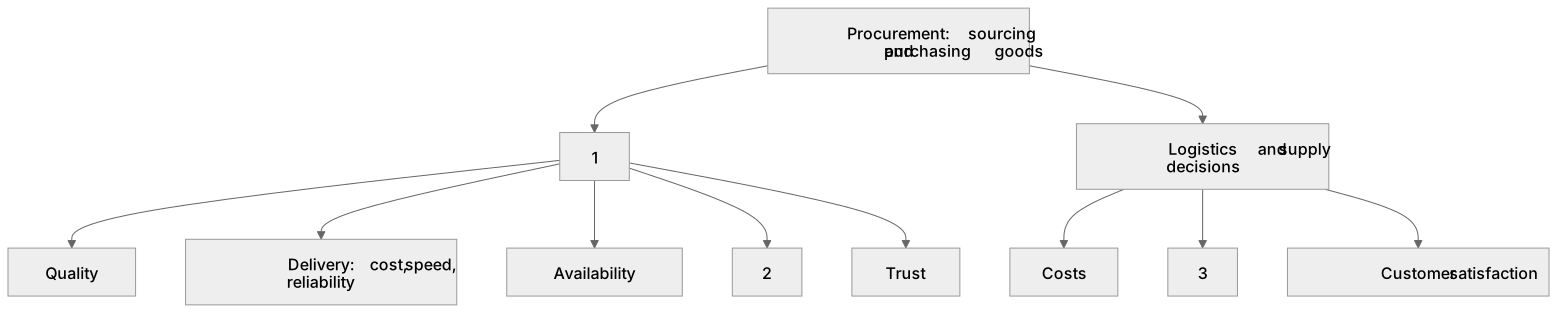
1Box 1
2Box 2
3Box 3
There is more to this lesson
The full lesson goes on to check your understanding and help you earn the marks. Create a free account to carry on, with your progress saved.
A week of Premium from your first lesson · Then the free plan continues · No card, no charge
Test your understanding of Working with suppliers: The role of procurement: ● relationships with suppliers: quality, delivery (cost, speed, reliability), availability, cost, trust ● the impact of logistics and supply decisions on: costs, reputation, customer satisfaction.
Active recall beats re-reading. Take an instant quiz now to test what you’ve learned and lock it into long-term memory.
A week of Premium from your first lesson · Then the free plan continues · No card, no charge